
Electric cars have moved past the curiosity stage. In most companies the question is no longer whether to switch, but which part of the fleet is ready to switch first. That second question is far easier to answer, because the answer already sits in your own vehicle usage data.
This article gathers what needs to be calculated and prepared before electric vehicles enter an operational fleet — from route patterns and charging readiness to the small things that usually only surface after the units have been running for a few months. It also covers the choice between buying units and electric car rental for the first stage.
Where the savings actually come from
The cost advantage of an electric vehicle does not come from its sticker price — that is still higher than a comparable combustion model. The savings show up in two items that repeat every month.
Energy cost per kilometre
An electric motor is far more efficient at turning energy into motion than a combustion engine. The gap is widest in stop-and-go city use, because an electric vehicle wastes no energy while standing still and returns part of its braking energy to the battery.
Routine maintenance cost
There is no engine oil, filter, spark plug, or exhaust system to replace on a schedule, and there are far fewer moving parts — the service checklist shrinks with them. What needs watching shifts instead: tyres, because an electric vehicle is heavier; brake pads, which usually last longer; the battery cooling system; and battery health itself.
That is why the useful comparison is not the purchase price but the total cost of ownership across the service life: energy, maintenance, tax, insurance, and the value of the vehicle at the end of the term. The figures differ for every company, depending on distance covered and route patterns. With car rental, part of these items is already covered by the monthly rental fee.
Which routes are ready to electrify first
Not every vehicle in a fleet is equally ready. The first candidates usually share these traits:
- Predictable daily distance that stays well below the range of a single full charge.
- Returning to the same point every day — office, pool, or a fixed user's home — so charging can happen while the vehicle is idle.
- City routes with frequent stops, where electric efficiency stands out most.
- A fixed parking spot that allows a charger to be installed.
Vehicles that run long intercity routes, carry heavy loads, or operate in areas where charging points are still sparse are better left on combustion for now. A mixed fleet is a normal outcome, not a job half done.
Charging readiness: the part most often underestimated
When an electric vehicle fails to feel practical, it is almost always about charging rather than the vehicle. A few decisions worth making early:
- The main charging location. Charging at the office or pool while the vehicle is idle is the cheapest pattern and the least disruptive to operations.
- The site's electrical capacity. Adding several charging points may require an increase in installed power. That takes time to arrange, so check it before the units arrive.
- The type of charger. Slower AC charging is usually enough for vehicles that stay overnight on site; DC fast charging is useful as a fallback, not as a daily habit.
- Charging points along the route. Map the public charging stations on the routes you use regularly, including one alternative in case the main point is occupied.
- Home charging policy. For company cars taken home, decide up front how the electricity cost at the user's home is measured and reimbursed.
What usually only becomes clear after a few months
- Real range differs from the brochure figure. Cabin cooling, a full load, highway speeds, and heavy rain all cut into distance. Leave a margin when planning routes.
- Tyres wear faster. Battery weight and instant torque raise tyre consumption. Budget for it from the start.
- Drivers need time to adjust. Regenerative braking, charging habits, and reading the remaining range are new skills. One short briefing session prevents a lot of complaints.
- Repairs depend on the workshop network. Make sure the model you choose has service support in the city where the vehicle operates. Under a car rental arrangement, ask the provider how servicing for electric units is handled in that city.
- Incentives change. Tax policy and facilities for electric vehicles in Indonesia are still developing and vary by region. Confirm the rules in force when the contract is drawn up rather than relying on last year's terms.
Start with a pilot fleet, not a full replacement
The safest approach is to run a handful of units first for one full period, then measure the results before expanding. Car rental suits this stage because the trial units do not have to be purchased. Three numbers are worth recording during the trial:
- Energy consumption per kilometre on your real routes, not under ideal conditions.
- The charging times and places actually used each day.
- Every occasion a vehicle was unavailable because of charging, and why.
Those three numbers turn the next decision into an evidence-based one — including the decision to keep part of the fleet on combustion.
Buy or use electric car rental for the first stage
Buying electric units means carrying two uncertainties at once: a purchase price that is still high and a resale value that has yet to settle while battery technology keeps moving. For a trial stage, neither risk is easy to justify.
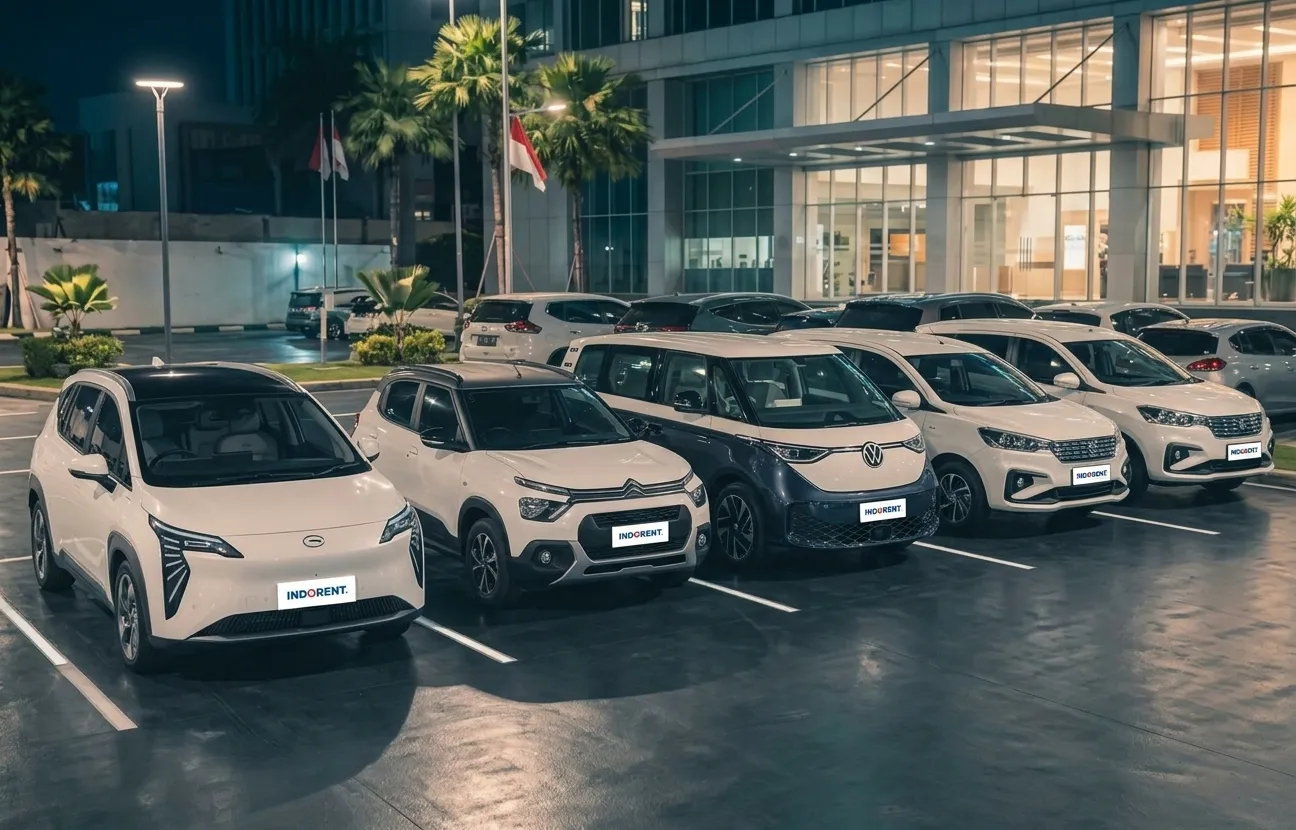
A car rental scheme moves the spend from capital expenditure to a monthly operating cost, and leaves resale risk with the provider. INDORENT electric car rental is available on one- to five-year contracts, with maintenance, tax, insurance, and replacement vehicles included. If some routes are not suited yet, the fleet can be mixed with combustion units through annual car rental or operational vehicles under one arrangement. For larger fleets, fleet management and driver services can be folded into the same contract.
Checklist before signing a car rental contract
- Average and peak daily distance for every vehicle you intend to replace.
- The location and number of charging points, along with the electrical capacity to support them.
- Maintenance coverage, battery warranty, and what happens when a unit goes into the workshop.
- Availability of replacement vehicles and emergency support in your operating city.
- Emission reporting needs, if your company has sustainability targets to report against.
Frequently asked questions
Are electric cars really cheaper for company operations?
On city usage with predictable daily distances, energy and maintenance costs are lower than a comparable combustion vehicle. What decides the outcome is not the unit price but total cost of ownership across the service life, so the calculation has to use your own route data.
What if the company has no charging facility yet?
Charging can start from the points already available at the office or pool while an increase in power is arranged, with public charging stations as a fallback. The thing to confirm first is the site's electrical capacity, because increasing it takes time.
How many units should a trial stage use?
A handful of units on the most predictable routes, run for one full period so the real charging and consumption patterns become visible. Those results become the basis before expanding to other parts of the fleet.
Can electric and combustion vehicles sit in the same car rental contract?
Yes. Many companies run a mixed fleet: electric units for city operations, combustion units for intercity routes or heavy loads, both managed under the same car rental contract.
Want to know which part of your fleet is readiest to switch? Contact the INDORENT team to work through an electric car rental cost simulation based on how your vehicles are used today.